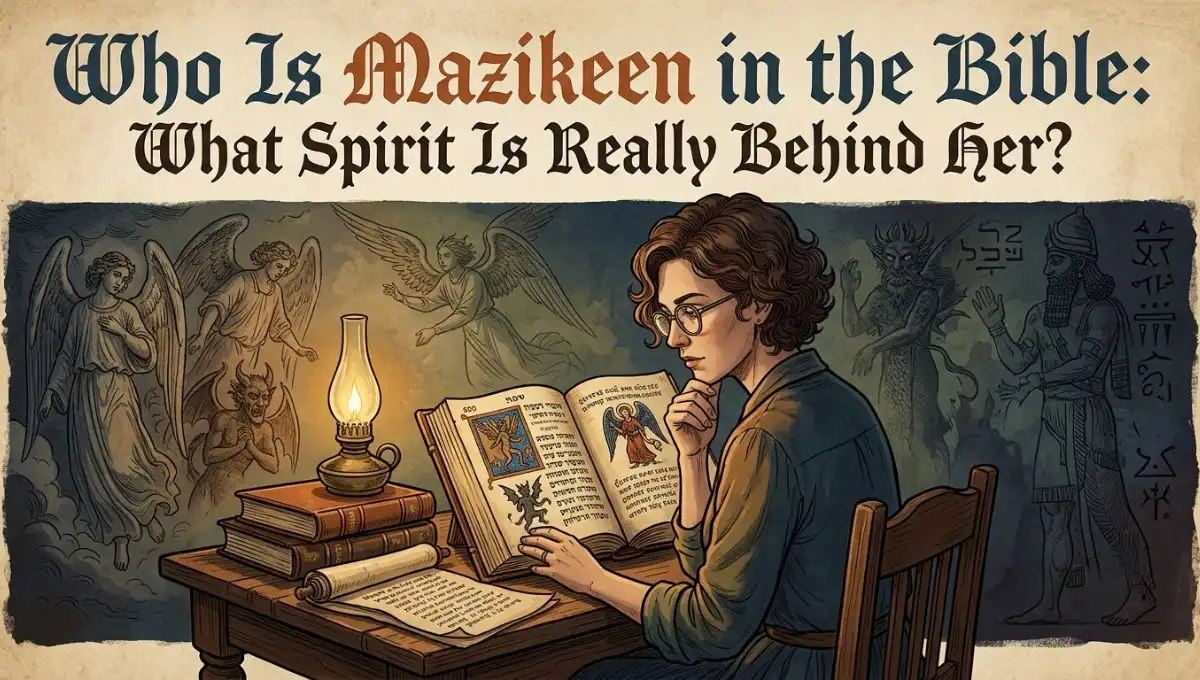
If you have watched Lucifer or read The Sandman, you have probably typed one question into Google: who is Mazikeen in the Bible? It is a fair question. She feels ancient, biblical, almost scriptural in the way she is written.
The short answer is that Mazikeen in the Bible does not exist as a named character. But her name is not made up from nothing. It comes from a real, centuries-old branch of Jewish demonology, and that history is worth understanding before you judge the character.
This article walks through where Mazikeen in the Bible actually sits, what the Talmud says about the spirits behind her name, and how a Hebrew folklore term turned into one of pop culture’s most beloved demons.
Is Mazikeen Mentioned Anywhere in the Bible? (New)
No. If you search every book, from Genesis to Revelation, you will not find the name Mazikeen anywhere. There is no verse, no genealogy, no prophecy that names her.
Mazikeen in the Bible is a common search phrase, but it is a misleading one. Scripture never uses this word. The name was assembled much later, borrowed from a related but different Hebrew term.
That does not mean the idea behind her is invented from thin air. The concept she is drawn from, harmful invisible spirits, has deep roots in Jewish tradition, even though it never appears under this exact name in the canonical Bible.
Is Mazikeen a Real Demon?
Not as a specific, individually named being. There is no ancient record of a demon called “Mazikeen” walking through Jewish or Christian texts. She is a modern literary invention.
What is real is the category she was named after: mazzikin, a class of harmful spirits described in the Talmud. Writers borrowed that term and turned it into a single named character.
So when people ask “is Mazikeen real,” the honest answer sits in the middle. The character is fictional. The folklore category behind her name is centuries old and well documented in Jewish sources.
What the Talmud Says About Mazikin
The Talmud, the core text of Rabbinic Judaism, talks about mazzikin, or mazikin, in several tractates. They are described as invisible spirits capable of both minor mischief and real harm.
The Talmud describes mazzikin as sharing traits with both angels and humans, having wings like angels, traveling great distances quickly, and knowing future events, while also eating, drinking, procreating, and dying like people. That mix of angelic and human traits is part of what makes them so strange.
Rabbinic sages such as Abaye taught that these spirits are far more numerous than humans and surround people constantly, while Rav Huna described thousands of them positioned on either side of every individual. The texts even describe folk methods for detecting them, like scattering ash near a bed to look for tiny footprints.
Other rabbinic sources, including Pirkei Avot 5:6, place the creation of these spirits at twilight on the sixth day, just before the Sabbath began. That detail becomes central to understanding Mazikeen mythology later on.
Mazikeen Mythology
Mazikeen mythology is really two stories layered on top of each other. One is ancient Jewish folklore about invisible harmful spirits. The other is a modern comic book and television mythology built by writers who borrowed that folklore.
Understanding both layers is the only way to answer “who is Mazikeen” honestly, because the character only makes sense once you see where the name came from.
Origins in Jewish Folklore
Jewish tradition describes the Mazikin as spirits created on the sixth day of creation, whose bodies were left unfinished when the Sabbath began, leaving them as formless beings caught between angels and humans.
This liminal, in-between quality is exactly why later writers found the name so useful. A being that belongs fully to neither the angelic nor the human world makes for compelling fiction.
The Folklore Story
Jewish oral tradition preserved several folk tales about mazikin encounters, often meant as cautionary or humorous stories rather than strict theology. One well-known tale describes a man terrified by a thundering knock at his door, only to find a grazing donkey outside, which then grew impossibly tall as he rode it away in fear.
Townspeople in the story concluded the creature must have been a mazik in disguise. Stories like this show how the folklore functioned: part warning, part explanation for strange, unsettling events.
Understanding the Origin of the Name Mazikeen
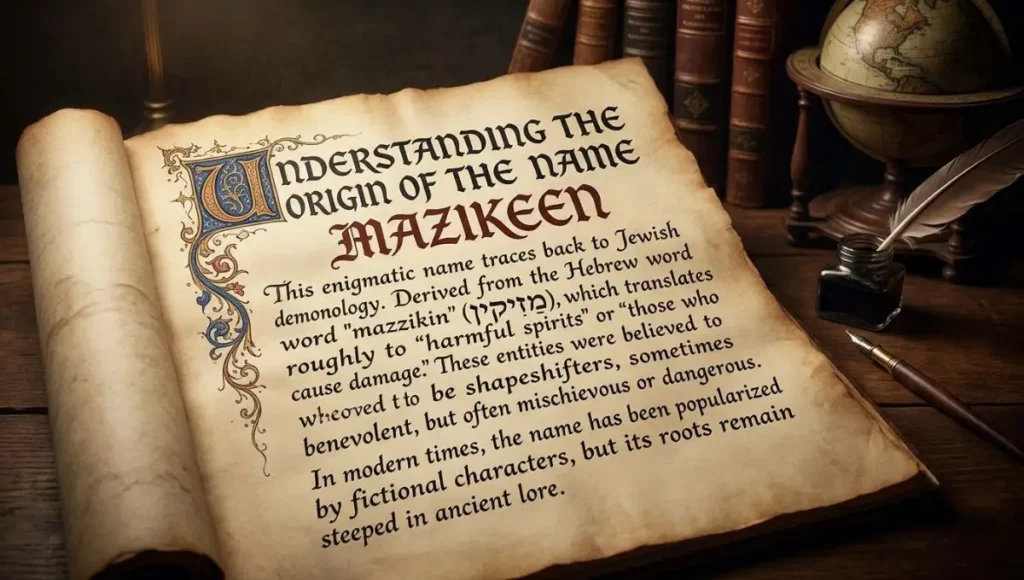
The Hebrew root behind the name is mazik, meaning “one who harms” or “damaging one.” The plural form, mazikin, refers to the whole class of these spirits in Jewish tradition.
The character first appeared in The Sandman (vol. 2) #22 in December 1990, created by Neil Gaiman and Kelley Jones, with her name taken directly from the term “mazzikin.” Gaiman anglicized the plural folklore term into a singular proper name for his character.
That single choice is why so many people now search “Mazikeen in the Bible” without realizing the name predates the character by well over a thousand years.
Cultural and Spiritual Significance of the Name Mazikeen
Names carry weight in Jewish mystical tradition. Knowing a spirit’s true name was believed to give some measure of understanding or authority over it, which is part of why the choice of name mattered so much creatively.
Beyond demonology, Mazikeen has come to symbolize liminality, existing between two worlds without belonging fully to either. It also carries the older idea of hidden danger, harm that arrives quietly rather than announcing itself.
This symbolic weight is a big reason the character resonates. She is not a cartoon villain. She represents something closer to the ambiguous, in-between spirits her name is drawn from.
Who Is Mazikeen in Sandman?
In the comics, Mazikeen is one of the Lilim, a child of Lilith, and appears as a human female with long bluish-black hair. She is depicted as a deformed demon with a half-rotted face who serves Lucifer in Hell, accompanying him to Los Angeles and helping him invade the Dreaming.
She has also served as war leader of the Lilim, a race of warriors descended from Lilith who were exiled. This version of the character is more formal and reserved than her television counterpart, often addressing Lucifer respectfully rather than as an equal.
The Sandman also inspired a 2022 Netflix drama series where Mazikeen appears played by Cassie Clare, still serving as Lucifer’s confidante in Hell.
What Kind of Demon Is Mazikeen in the Bible?
Since Mazikeen in the Bible is not a scriptural figure, the more useful question is what kind of demon her folklore ancestors were believed to be. The mazikin were considered low-level, mischievous spirits rather than towering, throne-shaking powers.
They were depicted as low-level demons, distinct from more powerful forces like dybbuks, often encountered in everyday life, inhabiting natural elements such as air, trees, water, and privies. They were nuisances more than apocalyptic threats.
Closest Biblical Parallels
The Hebrew Bible itself does contain other named spiritual beings that get compared to Mazikeen. Shedim appear in Deuteronomy 32:17, described as false gods to whom Israel wrongly sacrificed. Lilith is referenced in Isaiah 34:14 among desolate, wild creatures.
The New Testament adds its own category of evil spirits, including the possessing spirit called Legion in Mark 5, and the fallen angels referenced throughout Revelation. None of these texts use the name Mazikeen, but they represent the same general territory of harmful spiritual beings that her folklore ancestors occupied.
Difference Between Mazikeen and Biblical Demons (New)
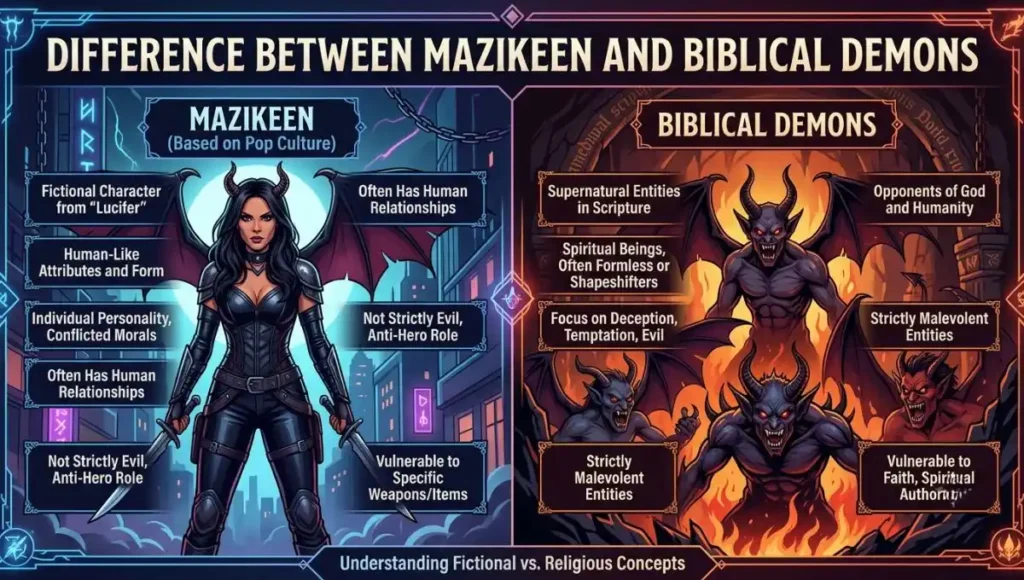
Biblical demons, like the unclean spirits Jesus casts out in the Gospels, are usually described as directly opposing God and actively tormenting people through possession. They are treated as serious spiritual threats requiring divine intervention.
Mazikin, by contrast, were folk-level nuisances. They are often listed as low-tier demons, akin to pests, ranked above minor imps but well below Hell’s greater powers. They caused illness or bad luck rather than possession or open warfare against God.
Mazikeen the character blends both ideas. She has the folkloric mazikin name but the dramatic, high-stakes role of a biblical-style demon, which is exactly why the comparison confuses so many readers.
Mazikeen of Lilith
Mazikeen’s father is identified in the comics as the serpent demon Ophur, a detail that also explains her one canonical power, the ability to drink and regurgitate venom. Her mother’s identity is far more central to her story than her father’s.
Issue #14 of the Lucifer comics establishes that Lilith bore her children, including Mazikeen, while living on the shores of the Red Sea. This ties Mazikeen directly into the older Jewish legend of Lilith as Adam’s first wife.
Who Is the Father of Mazikeen?
As noted above, her father in the comics is Ophur, a serpent demon rarely discussed outside specialist fan circles. The Lucifer television series never names her father at all, choosing instead to focus almost entirely on her relationship with Lilith.
That creative choice keeps the emotional core of her story centered on abandonment by her mother rather than absence of a father, which shapes nearly every major decision she makes on screen.
Read Also: 40+ Powerful Prayers for Good Medical Test Results During Stress
Her Relationship with Lucifer
Maze is among the oldest and strongest demons in the show’s mythology, learning the arts of torture on Abel, the first soul to arrive in Hell after being murdered by his brother Cain. While Lucifer ruled Hell, she served him faithfully, and he called her the most skilled torturer Hell has ever known.
Their bond is the emotional spine of the Lucifer series, shifting from master and servant into something closer to found family over several seasons.
Loyal Demon
For most of the story, Maze follows Lucifer out of Hell and works as his bodyguard and confidant. Her loyalty is not blind obedience so much as genuine attachment, one of the first real relationships she has ever had.
Strong and Independent Woman
As the series continues, Maze pushes to build a life of her own rather than stay defined by Lucifer. She becomes a bounty hunter, builds friendships on Earth, and starts making choices for herself rather than for him.
Complexities of Existence
Late in the series she wrestles openly with whether a demon can grow a soul at all, telling God flatly that she was created to be a killer and struggles even to feel settled in that role. That tension between what she was made for and what she wants defines her entire arc.
Mazikeen Demon Face
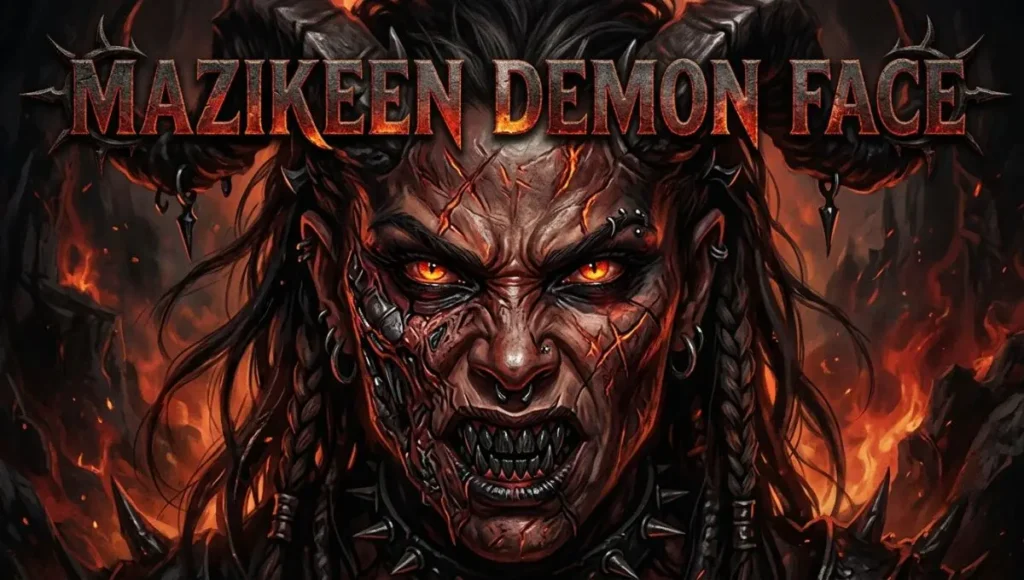
One of the most talked-about details fans search for is Mazikeen’s demon face, the true form hidden beneath her human appearance. In both the comics and the television series, this true face is central to her identity as a demon.
Her comic book appearance shows the left half of her face as horribly scarred and mutilated-looking, which she covers with a white mask when around humans.
What Happened to Mazikeen’s Face?
In the comics, she is described as half beautiful and half a decaying skull, a detail some fans compare to the Norse goddess Hel, whose appearance was said to be half lovely and half corpse-like.
The television series reveals the same true face in a mirror reflection during the episode “Sweet Kicks,” and she shows it openly to Trixie during a Halloween episode. In the show, this is presented as her natural demon form rather than an injury she received, something she disguises with a glamour rather than hides out of shame.
The Bigger Picture: Mazikeen’s Cultural Impact
Fans have praised her complex personality, unwavering loyalty, and impressive fighting skills, and many viewers have specifically appreciated the show’s representation of a bisexual woman of color at the center of the story.
Why She Resonates
People connect with Mazikeen because she is not simply good or evil. She occupies the same gray, uncertain space that most people actually live in, torn between what they were raised to be and who they want to become.
Themes She Embodies
Her story touches on abandonment, identity, loyalty, and the question of whether real change is possible. Those are universal human themes wrapped inside a demon’s storyline, which is exactly why the character has outlived the shows she first appeared in.
Should Christians Be Concerned About Mazikeen in Popular Culture? (New)
This is a fair and common question, and it deserves a straightforward answer. She does not exist as a biblical figure, and the character on screen is explicitly fiction, not a claim about real spiritual entities.
Christian viewers who are cautious about supernatural or occult themes in entertainment should absolutely use their own discernment, since that caution is reasonable regardless of the source material. But treating a comic book and television character as if she carries the same weight as scripture misunderstands what Mazikeen in the Bible actually means, which is nothing at all in a literal, textual sense.
The safest approach is simply informed viewing: know that the name is borrowed folklore, not doctrine, and make entertainment choices based on personal conviction rather than confusion about where the character comes from.
Frequently Asked Questions
Is Mazikeen in the Bible?
No. She does not appear anywhere in scripture under this name. Her name comes from Jewish folklore, not from any biblical text.
Who is Mazikeen according to the Bible?
The Bible says nothing about her directly. She is a modern character named after ancient Hebrew folklore about harmful spirits.
Is Mazikeen based on a real demon?
Not a single named demon. She is based on mazikin, a real folkloric category of harmful spirits described in the Talmud.
What does Mazikeen mean in Hebrew?
It comes from mazik, meaning “one who harms” or “damaging one.” The plural mazikin refers to the whole class of these spirits.
Who is Mazikeen’s mother?
Her mother is Lilith, described in Jewish legend as Adam’s first wife, in both the comics and the television series.
Who is Mazikeen’s father?
In the comics, her father is the serpent demon Ophur. The television series never names her father.
Is Mazikeen the daughter of Lilith?
Yes. She is one of the Lilim, the children of Lilith, across both the comic books and the Lucifer television series.
Is Mazikeen in Jewish mythology?
Not as an individual demon. The category she is named for, mazikin, is genuinely part of Jewish mythology and Talmudic tradition.
Is Mazikeen mentioned in the Talmud?
No, not by that exact name. The Talmud discusses mazikin as a class of spirits, not a single character called Mazikeen.
What kind of demon is Mazikeen?
In fiction, she is an archdemon and master torturer. Her folkloric namesakes were considered minor, mischievous, low-level spirits.
Why is Mazikeen’s face damaged?
In the comics, half her face is naturally skeletal as part of her Lilim heritage. In the show, it is her true demon form, not an injury.
Is Mazikeen good or evil?
Neither, fully. She is written as morally complex, capable of cruelty and genuine loyalty depending on the story and season.
Is Mazikeen Lucifer’s wife?
No. She is his closest confidant, bodyguard, and former lover in some storylines, but never his wife in the comics or the show.
Is Mazikeen a fallen angel?
No. She is a demon and one of the Lilim, descended from Lilith, not a fallen angel like Lucifer or Amenadiel.
Who created the character Mazikeen?
Neil Gaiman and artist Kelley Jones created her for The Sandman #22 in December 1990, later adapted for Lucifer and other DC projects.
Conclusion
So, who is Mazikeen in the Bible? Strictly speaking, nobody. Mazikeen in the Bible is a search phrase built on a common misconception, not a scriptural reality.
What is real is the folklore she borrows from: the Talmudic mazikin, invisible spirits believed to cause everyday harm, described across centuries of Jewish tradition. Neil Gaiman took that ancient term and shaped it into a single, unforgettable character.
From Talmudic footnotes to Netflix screens, her journey shows how old folklore can be reborn for new audiences without ever claiming to be scripture itself. Mazikeen in the Bible may not exist, but the questions she raises about identity, loyalty, and change are worth exploring either way.

Zohaib Israr is a content writer at [prayersmsg.com], specializing in Messages and Prayers. With 5 years of experience, he creates meaningful, engaging, and easy-to-read content that connects with readers.