
Every believer has asked the same question at some point in their walk of faith: does God always answer prayers the way we hope? The truth is richer than a simple yes or no. Scripture reveals 3 ways God answers prayer, and understanding them can transform how you pray, how you wait, and how you trust God’s plan for your life.
This guide walks through those three biblical answers using real, well-known examples from Paul, Jacob, and David. Along the way, you’ll learn why 3 ways God answers prayer is such a comforting framework for anyone walking through unanswered prayer, how to recognize God’s answer when it comes, and what to do while you wait on Him with patience and hope.
God Answers Our Prayers in These 3 Ways
When you study Scripture closely, you find that God answers prayer in one of three ways: He asks us to keep the trial, He grants the desire of our heart, or He lovingly says no. Understanding the 3 ways God answers prayer removes much of the confusion many Christians feel when their prayers seem to go unanswered.
This isn’t a rigid formula, but a pattern found throughout biblical faith. Paul, Jacob, and David each experienced one of these responses, and their stories show us what trusting God’s plan looks like in real, everyday life. Recognizing the 3 ways God answers prayer also helps believers avoid the discouragement that comes from expecting only one type of yes.
Christian living involves accepting that God’s wisdom is higher than our own. Whether the answer is a trial, a gift, or a gentle no, each one flows from God’s love, mercy, and sovereignty over our lives.
Why God Doesn’t Always Answer Prayers Immediately
God’s timing rarely matches our timeline. Prayer according to the Bible is never about instant results; it’s about relationship with God and spiritual growth. Waiting on God stretches our faith and deepens our trust in His perfect will, even when the wait feels long or painful.
Sometimes God delays an answer to build patience and endurance. Sometimes He’s arranging circumstances behind the scenes that we can’t yet see. And sometimes, as we’ll explore next, the “delay” is actually one of the 3 ways God answers prayer just not the one we expected or hoped for.
Faith in God means trusting His timing even when logic says otherwise. Biblical faith doesn’t require full understanding; it requires surrender to God’s sovereignty and confidence in His unfailing goodness.
1. You Are Going to Keep Your Trial
The first of the 3 ways God answers prayer is by allowing the trial to remain. This is hard to accept, but it’s deeply biblical. God’s sovereignty means He sees a bigger purpose in our suffering than we could ever see ourselves.
A. Thorn in the Flesh (2 Cor. 12:7–10)
Paul’s thorn in the flesh is one of the clearest biblical examples of answered prayer that isn’t removal. Paul begged God three times to take away his affliction, believing relief would strengthen his ministry. Instead, God’s grace answered with strength for the trial, not an escape from it.
God told Paul, “My grace is sufficient for you, for my power is made perfect in weakness.” This is one of the most quoted Bible verses about God answering prayer, and it reframes weakness as the very place where God’s strength shows up most clearly.
This example illustrates 2 Corinthians 12 beautifully: God’s answer wasn’t rejection, but redirection. Paul’s suffering became the platform for God’s power, teaching every generation since about trusting God’s plan even in unresolved pain.
Paul’s Response: Delight
Paul didn’t grow bitter or resentful. He chose to boast in his weaknesses so that Christ’s power would rest on him more fully. This is obedience to God in action accepting the trial rather than resenting it or demanding a different outcome.
His response teaches Christian living at its core: when God says “keep the trial,” worship and trust are still fully possible. Paul’s endurance became a lasting testimony of biblical faith and spiritual maturity for every generation since.
2. I Am Going to Grant You the Desires of Your Heart
The second of the 3 ways God answers prayer is a direct yes. Sometimes God gives exactly what we ask for, though often after a season of wrestling, waiting, or persistent prayer that tests our resolve.
B. Jacob Wrestles with God (Gen. 32:23–34)
Jacob’s story in Genesis 32 shows persistent prayer in its rawest, most physical form. Facing reconciliation with his estranged brother Esau, Jacob wrestled all night with a divine figure and refused to let go until he received a blessing.
This encounter, known as Peniel, meaning “face of God,” marks the moment Jacob’s desperate prayer was finally answered. Jacob and Esau’s reconciliation soon followed, fulfilling the deep desire of Jacob’s heart for peace, safety, and restored family.
Genesis 32 remains one of the most vivid answered prayer in the Bible accounts, showing that sometimes God’s answer requires our full engagement, humility, and refusal to give up before the blessing comes.
Jacob’s Response: A Memorial
Jacob renamed the place Peniel because he had seen God face to face and survived the encounter. He marked the moment with a lasting memorial, a physical reminder of God’s faithfulness and answered prayer in the Bible.
His response models something powerful: gratitude that remembers. When God grants the desire of your heart, marking that moment strengthens your prayer life and prepares you for the trials still ahead on your journey of faith.
3. I Love You, but No
The third of the 3 ways God answers prayer is the hardest to hear: sometimes God’s answer is simply no. This isn’t rejection it’s love expressed through divine guidance we don’t always understand in the moment of asking.
C. David Prays for His Child (2 Sam. 12)
King David’s prayer for his sick child is one of the most painful examples of unanswered prayer in the Bible. David fasted and pleaded for seven days, lying on the ground in desperate intercession, yet the child did not survive.
This account, tied to the story of David and Bathsheba, shows that even a man after God’s own heart received a hard no. Yet Scripture never suggests God stopped loving David. His mercy remained constant, even in the answer David didn’t want to hear.
2 Samuel 12 reminds us that God’s love and God’s no can coexist. The 3 ways God answers prayer framework helps us see that a no isn’t the absence of love it’s often the presence of a deeper mercy we can’t yet measure.
David’s Response: Worship
When the child died, David got up, washed, and worshiped. His servants were stunned by his composure, but David explained that while the child was alive he fasted and prayed, hoping God would be gracious and change the outcome.
Once the answer came, David trusted God’s plan and moved forward in faith rather than despair. His response teaches spiritual maturity: worship isn’t reserved only for answered prayer. It belongs to every season, including the no.
Read Also: 55+ Best Tuesday Morning Prayers and Blessings Quotes and Images
How to Recognize God’s Answer to Your Prayer

Recognizing God’s answer to prayer takes discernment and Holy Spirit guidance. Look for peace that settles your spirit, circumstances that align with Scripture, and confirmation through wise counsel or God’s Word itself.
Sometimes the answer is obvious and immediate. Other times, it unfolds slowly, and only in hindsight do you see how God responded to prayer exactly as He intended all along. Learning the 3 ways God answers prayer gives you a framework for interpreting each season with clarity instead of confusion.
Pay attention to open and closed doors, the counsel of mature believers, and the quiet confirmation of the Holy Spirit. These signs, combined with Scripture, help you discern which of God’s answers you’re currently experiencing.
Continue Praying
Praying without ceasing doesn’t mean repeating the same request anxiously or out of fear. It means staying in ongoing conversation with your heavenly Father, trusting His wisdom even before the answer arrives.
Keep praying while you wait, just as Jacob did. Persistent prayer often precedes the clearest answers, and it deepens your relationship with God regardless of the outcome.
Bible Verses About God Answering Prayer
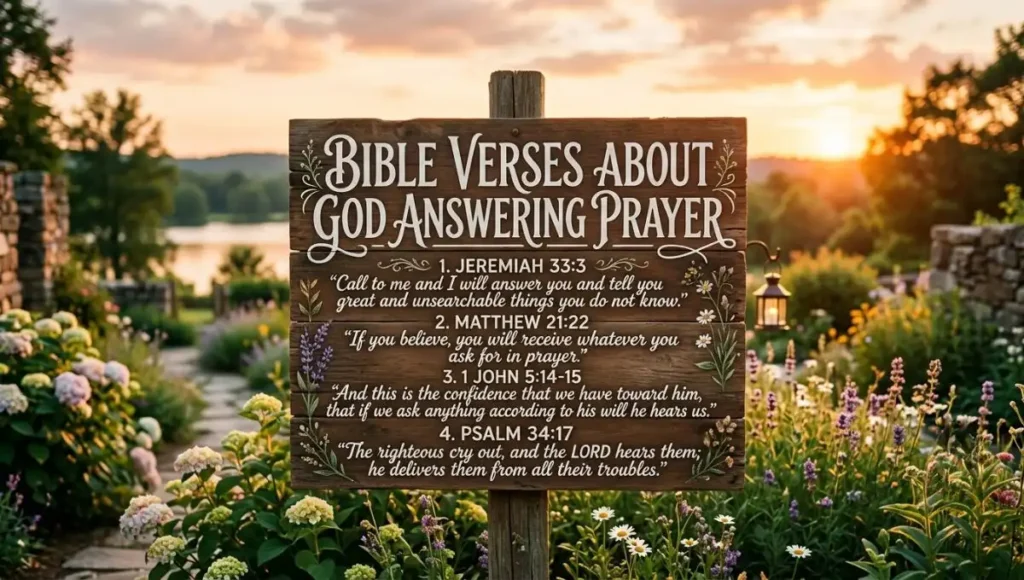
Scripture offers deep comfort about how God answers prayers. A few key passages that support the 3 ways God answers prayer framework include:
- Matthew 7:7–8 — “Ask, seek, knock,” a promise that God responds to genuine, persistent prayer offered in faith.
- 2 Corinthians 12:9 — God’s grace as sufficient strength in every trial, even when the trial remains.
- Romans 9:15–16 — God’s mercy operates according to His will, not our effort or merit alone.
- 1 John 5:14–15 — Confidence that prayer according to God’s will is always heard and answered.
- Jeremiah 29:11 — A reminder of God’s purpose and plans of hope, not harm, for those who trust Him.
These verses ground the 3 ways God answers prayer in solid biblical truth rather than personal opinion or guesswork, giving every believer a foundation for their prayer life.
FAQs
Does God always answer every prayer?
Yes, God hears and answers every prayer, though the answer may be yes, no, or wait rather than exactly what we expect.
Why does God say no to some prayers?
God says no when His wisdom sees a better plan or when the request doesn’t align with His will and purpose for our lives.
What are the three answers God gives to prayer?
The 3 ways God answers prayer are letting you keep the trial, granting the desire of your heart, or lovingly saying no for your good.
How do I know God has answered my prayer?
Look for peace, alignment with Scripture, and confirmation through circumstances or trusted spiritual guidance in your life.
Why does God make us wait?
Waiting builds faith, patience, and spiritual maturity, and often prepares us for what the answer will require of us later.
What does “My grace is sufficient for you” mean?
It means God’s strength is enough to sustain us through weakness, trials, and suffering, even without removing them entirely.
Should I keep praying if God hasn’t answered?
Yes, persistent prayer reflects trust in God’s timing and keeps your relationship with Him active while you wait for clarity.
Can unanswered prayers be a blessing?
Often, yes. What feels unanswered may be God protecting you from something harmful or preparing something far better ahead.
Does God hear every prayer?
Yes, Scripture confirms God hears every prayer offered in faith, regardless of how it’s ultimately answered in the end.
How can I pray according to God’s will?
Align your requests with Scripture, seek the Holy Spirit’s guidance, and remain open to His answer, whatever form it takes.
Conclusion
Understanding the 3 ways God answers prayer changes how we approach every request we bring before Him. Whether He asks us to keep the trial, grants the desire of our heart, or lovingly says no, each answer flows from His grace, mercy, and perfect will for our good.
Paul, Jacob, and David all discovered that God’s answer, in every form, deserves worship and trust rather than despair. As you continue your prayer life, hold on to God’s promises, keep praying without ceasing, and remember the 3 ways God answers prayer the next time you bring a request before your heavenly Father.

Zohaib Israr is a content writer at [prayersmsg.com], specializing in Messages and Prayers. With 5 years of experience, he creates meaningful, engaging, and easy-to-read content that connects with readers.