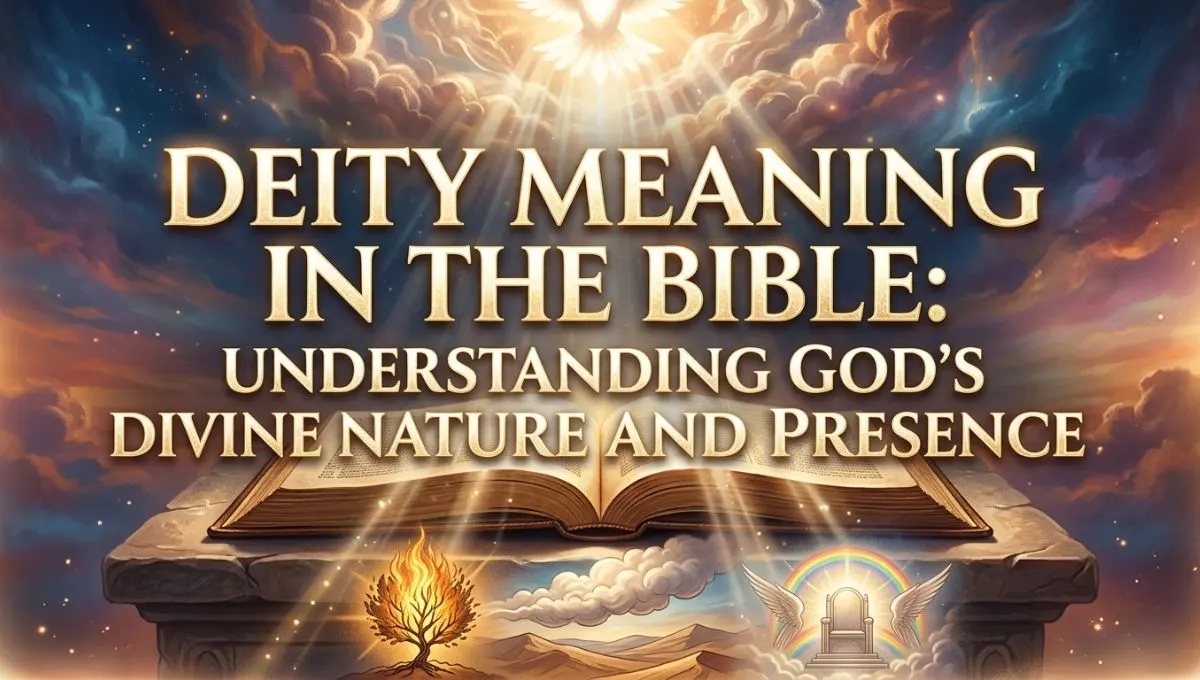
Have you ever wondered what the phrase “God is divine” truly means? The deity meaning in the Bible is one of the most important truths a Christian can understand. It is not just a theological term it shapes how you pray, how you worship, and how you live every day.
In this article, we explore the deity meaning in the Bible from Genesis to Revelation. The deity meaning in the Bible is broader and richer than most people realize, covering God the Father, Jesus Christ, the Holy Spirit, and the Trinity.
Biblical Meaning of Deity
1. Definition of Deity in the Bible
The biblical meaning of deity comes from the Greek word theotēs (θεότης), meaning the essential state of being God. It refers to God’s complete divine nature not just His power, but His very essence as the supreme being.
Colossians 2:9 states: “For in Christ all the fullness of the Deity lives in bodily form.” This single verse captures the deity meaning in the Bible with stunning clarity. Deity means the full quality of being God eternal, holy, and sovereign.
Understanding what is deity in the Bible begins here: there is only one true God, and His divine nature is infinite, unchanging, and unshared.
Every serious study of the deity meaning in the Bible leads to this same conclusion God’s divine nature is the bedrock of all Christian faith and doctrine.
2. Deity of God the Father
The deity of God the Father is the foundation of all biblical theology. Isaiah 45:5 declares: “I am the Lord, and there is no other; besides Me there is no God.”
God the Father is omnipotent all-powerful. He is omniscient all-knowing. He is omnipresent present everywhere. These divine attributes belong exclusively to Him. No created being shares in this divine nature.
When we explore the deity meaning in the Bible, we must start with God the Father the eternal God, the creator of heaven and earth, whose sovereignty extends over every nation and every moment in time.
3. Deity of Jesus Christ
The deity of Jesus Christ is one of the most critical doctrines in all of Scripture. John 1:1 states plainly: “In the beginning was the Word, and the Word was with God, and the Word was God.” Jesus is the Word who became flesh fully human, yet retaining His full divine nature.
The deity meaning in the Bible points directly to Jesus when Colossians 2:9 declares that the fullness of deity dwells in Him bodily. Not a portion. The fullness. Thomas confirmed this in John 20:28 when he cried: “My Lord and my God!” Jesus accepted this worship because it was true.
Jesus is not merely a prophet or teacher. The biblical proof of Jesus’ deity is overwhelming. He forgave sins, accepted worship, raised the dead, and claimed to be one with the Father (John 10:30).
4. Deity and the Trinity
The deity meaning in the Bible is inseparable from the doctrine of the Trinity. God is one in essence yet revealed in three co-equal, co-eternal persons: Father, Son, and Holy Spirit. Each person fully shares the same divine nature.
Matthew 28:19 captures this: “Baptizing them in the name of the Father and of the Son and of the Holy Spirit.” One name three divine persons. This is the Holy Trinity one God in three persons a truth unique to Christian belief.
Deity in the Old Testament
1. God’s Divine Attributes Revealed
To fully appreciate the deity meaning in the Bible, we must look to the Old Testament, where God’s divine nature in breathtaking detail. He is the creator God who spoke the universe into existence. He is omnipotent (Job 42:2), omniscient (Psalm 139:1–4), and omnipresent (Psalm 139:7–10).
His holiness separates Him from all creation. His glory fills the heavens. The deity meaning in the Bible is confirmed throughout the Old Testament through God’s mighty works the Exodus, the parting of the Red Sea, and the provision for His people in the wilderness.
2. Names of God and Their Meaning
The names of God in Scripture are not mere labels they are divine self-revelations. Each name unlocks a dimension of His character and divine nature.
Yahweh (YHWH) Used over 6,500 times in the Old Testament, this sacred name means “I AM WHO I AM” (Exodus 3:14). It speaks to God’s eternal, self-existing nature. Elohim The Hebrew word for God used in Genesis 1:1. Though plural in form, it refers to the one supreme being. Adonai Meaning “Lord” or “Master,” affirming God’s sovereignty. El Shaddai “God Almighty,” revealing His unlimited power.
These names together paint the full picture of the God of Israel the eternal God whose deity is beyond human comprehension.
3. God’s Relationship with Israel
God chose Israel to be His covenant people not because of their greatness, but because of His grace and sovereign will (Deuteronomy 7:6). Through this relationship, He revealed more of Himself: His law, His justice, His mercy, and His faithfulness.
The God of Israel is not a passive deity. He acts. He speaks. He protects. His involvement in Israel’s history is a living demonstration of what the deity meaning in the Bible looks like when expressed in time and space.
Deity in the New Testament
1. Jesus as the Full Revelation of God
The New Testament brings the deity meaning in the Bible to its highest expression, showing that every promise the Old Testament made about God’s divine nature finds its fulfillment in Christ. Hebrews 1:3 describes Jesus as “the radiance of the glory of God and the exact imprint of His nature.” Jesus does not reflect God He is God.
Colossians 1:15 calls Jesus “the image of the invisible God.” Through Christ, we see the Father. His miracles, His teachings, His death, and His resurrection all declare one truth: Jesus Christ is Lord fully God and fully man.
2. The Holy Spirit’s Divine Nature
The Holy Spirit is not a force or symbol. He is the third person of the Trinity a divine person who fully shares in the divine nature of God. Acts 5:3–4 makes this unmistakably clear: lying to the Holy Spirit is lying to God.
The Holy Spirit convicts, leads, teaches, and intercedes. Romans 8:11 says the Spirit who raised Jesus from the dead lives in every believer. This is the power of God’s deity made personal and present in your life.
3. Early Christian Understanding of Deity
The earliest Christians had no confusion about the deity meaning in the Bible. They worshiped Jesus as Lord, prayed to the Trinity, and grounded their faith in the divine nature of the God they served.
The Nicene Creed (325 AD) formally declared Jesus as “true God from true God, begotten not made, of one Being with the Father.” This was not a new invention it was the biblical truth the apostles had taught from the beginning.
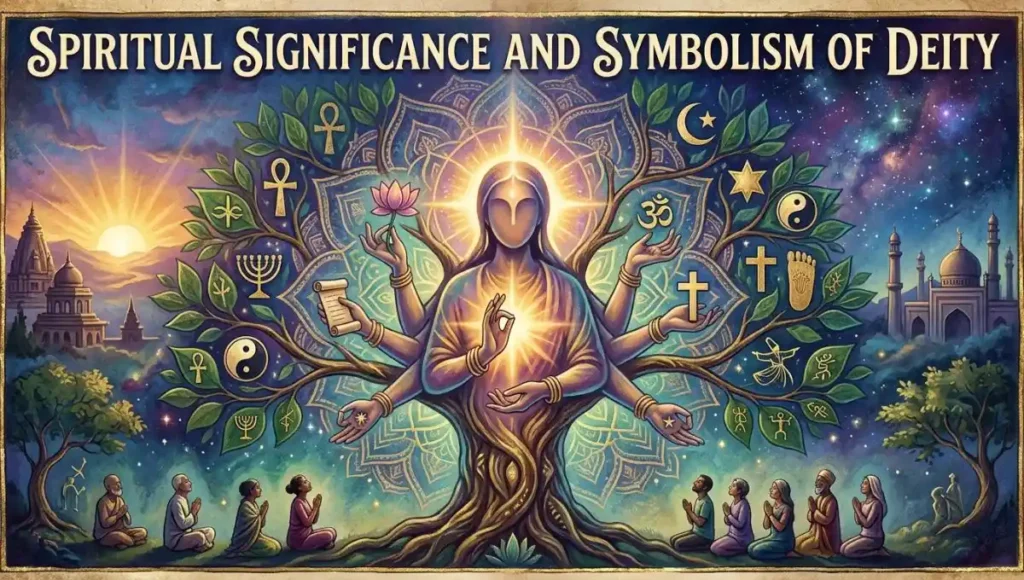
Spiritual Significance and Symbolism of Deity
1. Deity as God’s Presence
God’s divine nature is the ground of His real, active presence in your life. Psalm 46:1 says: “God is our refuge and strength, a very present help in trouble.” That help is dependable because His deity is real.
The deity meaning in the Bible means you are never praying to a distant symbol. The deity meaning in the Bible is what makes prayer real you are reaching the sovereign creator, not a religious idea. You are calling on the omnipotent, omnipresent creator of heaven and earth who is fully capable and fully willing to respond.
2. Deity and Human Faith
Understanding the deity meaning in the Bible transforms how you exercise faith. In fact, the deity meaning in the Bible is the very reason faith makes sense. Faith is only as strong as the God it is directed toward.
When you grasp God’s divine nature His holiness, His sovereignty, His eternal power your faith becomes unshakeable.
Hebrews 11:6 says: “Without faith it is impossible to please God.” That faith rests on a God whose divine attributes make Him entirely trustworthy.
3. Transformation Through Knowing God
The most extraordinary promise in the New Testament is that knowing God’s divine nature changes us. 2 Corinthians 3:18 teaches that as we behold His glory, we are “transformed into the same image from one degree of glory to another.”
The deity meaning in the Bible is ultimately an invitation to encounter the living God and be reshaped by His presence, His character, and His love.
Read Also: Lily Name Meaning in the Bible: A Symbol of Purity, Beauty, and God’s Care
Deity in Daily Life and Spiritual Experience

1. Recognizing God’s Deity in Life
Romans 1:20 says that God’s “eternal power and divine nature have been clearly perceived… in the things that have been made.” Creation itself preaches the deity meaning in the Bible.
Every time you encounter the natural world, you are encountering evidence of the deity meaning in the Bible. Every sunrise, every answered prayer, and every act of grace is a reminder that you serve a truly divine God.
2. Deity in Christian Belief
Christian belief is grounded in the conviction that God is truly and fully divine. The deity meaning in the Bible is not optional background theology it is the core of everything.
When Christians ask what is deity in the Bible, they are really asking: who is the God we worship? it is the foundation of Christian faith, worship, prayer, and hope. Without it, Christianity collapses.
3. Responding to God’s Deity
Isaiah’s response to God’s glory in the temple was immediate: awe, repentance, and surrender (Isaiah 6:5). Responding to the deity meaning in the Bible and to the deity meaning in the Bible’s call to worship a life of worship, humility, and wholehearted obedience to the one true God.
Common Misunderstandings About Deity
1. Deity vs. Human Authority
No pastor, prophet, or religious leader shares in the divine nature of God. The deity meaning in the Bible is exclusive to God alone. Human authority is always delegated never divine. Elevating any human figure to divine status is idolatry, clearly condemned in Scripture (Exodus 20:3).
2. Deity and False Gods in Scripture
The Bible acknowledges the existence of false gods idols and spiritual beings that humans worship. But these possess no true deity. They cannot create. They cannot save. They are not eternal. Only Yahweh possesses genuine divine nature, and the deity meaning in the Bible always points exclusively to Him.
3. Why Understanding Deity Matters Today
In a world filled with spiritual confusion, the deity meaning in the Bible anchors believers in truth. Many people worship a god of their own imagination. But the God of the Bible has revealed Himself in Scripture, in creation, and supremely in Jesus Christ. That revelation is authoritative and non-negotiable.
Practical Lessons and Faith Insights
The deity meaning in the Bible carries rich practical implications for daily life. Once you understand the deity meaning in the Bible, you cannot remain unchanged.
Pray boldly. Your God is omnipotent He can do what no one else can. Trust deeply. His divine sovereignty means nothing surprises Him. Worship fully. His holiness deserves your complete devotion. Share confidently. The God you proclaim is the creator of heaven and earth not one option among many. The deity meaning in the Bible gives you something worth proclaiming.
Living in the light of the deity meaning in the Bible turns ordinary days into acts of worship and transforms ordinary faith into something bold, joyful, and deeply rooted.
Conclusion
The deity meaning in the Bible is the heartbeat of Christian faith. From the Old Testament covenant to the New Testament cross, the deity meaning in the Bible shows how God revealed Himself as the one true divine being eternal, holy, sovereign, and intimately present with His people.
He reveals His divine nature through His names, His mighty works, and His word. He reveals it perfectly through Jesus Christ in whom the fullness of deity dwells bodily. He makes it personal through the Holy Spirit who lives in every believer.
Grasping the deity meaning in the Bible is not just for scholars. The deity meaning in the Bible belongs to every believer, every seeker, and every person who has ever looked at the night sky and asked is there really a God?
It is for every person who wants to know God more deeply, trust Him more completely, and live in the transforming reality of His divine presence. The God of the Bible is truly God and that changes everything.
FAQs
What does deity mean in the Bible?
Deity in the Bible refers to the full divine nature and essence of God the quality of being truly and completely God. The Greek word theotēs (Colossians 2:9) describes this as the very state of being God, not merely godlike qualities.
Is Jesus considered deity in Christianity?
Yes. Christianity firmly teaches the deity of Jesus Christ. John 1:1, Colossians 2:9, and Hebrews 1:3 all affirm that Jesus is fully God the complete embodiment of divine nature in human form, not a lesser being.
What is the difference between God and deity?
“God” refers to the divine person, while “deity” refers to the divine nature or quality of being God. In the Bible, only the triune God Father, Son, and Holy Spirit possesses true deity, meaning the eternal, sovereign, and holy divine essence.
How does the Bible describe God’s deity?
The Bible describes God’s deity through His attributes: omnipotent, omniscient, omnipresent, holy, and eternal. His names Yahweh, Elohim, El Shaddai each reveal a dimension of His divine nature as the supreme being and creator of all things.
Why is understanding deity important for Christians?
Understanding the deity meaning in the Bible gives Christians an unshakeable foundation for faith, worship, and life. It guards against false teaching, deepens trust in God, and reveals the true character of the God Christians serve not a concept, but the living, eternal, all-powerful God of Scripture.

Zohaib Israr is a content writer at [prayersmsg.com], specializing in Messages and Prayers. With 5 years of experience, he creates meaningful, engaging, and easy-to-read content that connects with readers.