
If you’ve ever wondered about the Amy meaning in Bible context, you’re not alone. Thousands of parents and believers search for the deeper roots of this gentle, timeless name every year. While Amy doesn’t appear as a character in Scripture, its meaning connects beautifully with one of the Bible’s central themes.
This guide explores the Amy meaning in the Bible, its Hebrew and French roots, spiritual symbolism, and why so many Christian families still choose it today. Understanding the Amy meaning in Bible context helps explain why the name still resonates with believers today.
Amy Meaning in the Bible Verse
There isn’t one specific verse that mentions the name Amy directly. However, the meaning of Amy in the Bible is closely tied to verses about being loved and chosen by God.
A verse often connected with the name is 1 John 4:19, which reminds believers that they are loved by God first. Since Amy means “beloved,” many Christians pair the name with verses celebrating God’s unconditional love and grace toward His children. This is part of why the Amy meaning in Bible discussion so often circles back to Scripture’s teaching on love.
Amy Meaning in Bible Pronunciation
Amy is pronounced AY-mee, with the stress on the first syllable. It’s a short, soft, two-syllable name that flows easily in everyday speech.
The simplicity of its Amy pronunciation has helped it remain popular across generations, especially among Christian families who value names that are both meaningful and easy to say. Even the pronunciation adds to the Amy meaning in Bible appeal, since a name that’s easy to say is easy to carry as a daily reminder of faith.
Amy Meaning in Bible Hebrew
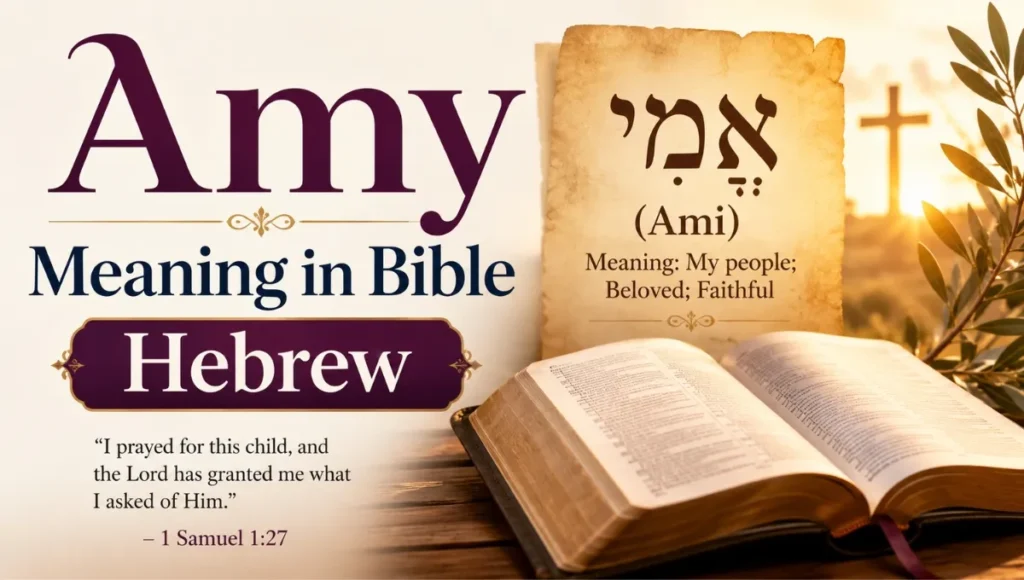
Amy is not originally a Hebrew name, so there’s no direct Hebrew-scripture translation for it. Its roots trace back to Old French and Latin rather than ancient Hebrew.
That said, the concept behind Amy beloved appears frequently in Hebrew Scripture. Words like “ahuva” (beloved) and names built around love and divine affection carry a similar spiritual weight to what Amy represents today. This shared idea is central to the Amy meaning in Bible Hebrew discussion, even without a direct linguistic link.
Amy Name Meaning Hebrew
Since Amy isn’t a Hebrew-origin name, the Amy name meaning Hebrew connection is more thematic than linguistic. In Hebrew tradition, being “beloved” often signals a special covenant relationship with God.
This is why many Christian parents feel the name Amy still carries biblical resonance, even without appearing in the original Hebrew texts. It’s another angle on the Amy meaning in Bible conversation that keeps drawing families back to the name.
Amy Meaning in Bible Catholic
In Catholic naming tradition, names don’t need to appear in Scripture to hold spiritual value. This perspective focuses on the virtue behind the name rather than a direct biblical reference.
Catholic parents often choose Amy because “beloved” reflects core teachings about God’s love, grace, and the dignity of every soul as a cherished child of God. In this way, the Amy meaning in Bible Catholic outlook stays consistent with the wider Amy meaning in Bible theme found across Christian traditions.
Is the Name Amy in the Bible?
This is one of the most searched questions, so let’s answer it clearly: no, Amy is not mentioned in the Bible as a specific character or name.
However, when people ask “is Amy a biblical name,” they’re often really asking about its meaning rather than its literal presence in Scripture. Because Amy means “beloved,” and being beloved by God is a major biblical theme, many still consider it a spiritually meaningful, Christian-friendly name. That question, at its heart, is really a question about the Amy meaning in Bible symbolism rather than a literal Scripture search.
Origin of the Name Amy
The Amy origin traces back to the Old French name Amée, which comes from the Latin Amata, meaning “beloved” or “well-loved.” It comes from the feminine past participle of the Old French verb “amer,” meaning “to love,” which itself derives from the Latin “amare,” meaning to love or find pleasure in.</cite>
As an English name, Amy was already in limited use during the Middle Ages and saw a strong revival in the 19th century.It ranked among the 50 most popular English girls’ names between 1538 and 1700. The history of the name Amy shows a name that has quietly endured for centuries. Its long history is part of what keeps the Amy meaning in Bible discussion relevant generation after generation.
Amy Meaning in French
In its original French form, Amy comes from Aimée, the feminine form of “aimé,” meaning “loved” or “beloved.” The name derives from the Old French “Amee,” which comes from the Latin “amatus,” meaning loved.
The Amy meaning in French is essentially identical to its English meaning a name that literally declares its bearer is cherished and loved. This overlap between the French roots and the Amy meaning in Bible theme is what makes the name feel spiritually rich despite its secular origin.
Amy Name Meaning in Islam
Amy is not a traditional Arabic or Islamic name, so it does not appear in Islamic naming texts or the Quran. The Amy name meaning in Islam context is largely absent, since the name has Western Christian roots rather than Arabic ones.
Families seeking Islamic names with a similar meaning often look toward names like Habiba or Mahbooba, both of which also translate to “beloved.” Even outside Christian tradition, the same beloved-centered idea behind the Amy meaning in Bible concept appears across cultures.
Amy Name Variations and Nicknames

Amy has inspired many charming spellings and pet names across different cultures. Common variations include Aime, Aimee, Aimi, Amee, Ami, Amie, Amita, and Eimy.
Popular nicknames include:
- Am
- Ames
- Aimes
- Ammie
- Mimi
The classic French spelling Aimée also means “beloved,” while Amia offers a more modern, Latinized twist on the same root.</cite> These Amy name variations all echo the same central meaning of love. No matter the spelling, each variation still points back to the same Amy meaning in Bible idea of being cherished.
Amy Meaning in Bible: Spiritual Interpretation
Even though Amy isn’t found in Scripture, the Amy meaning in Bible spiritual interpretation centers on one powerful idea being deeply and unconditionally loved by God. This theme runs throughout both the Old and New Testaments.
Below are three core spiritual angles that explain why Amy resonates so strongly with Christian believers. Each angle builds on the same Amy meaning in Bible foundation: being deeply and permanently loved.
1. Beloved in God’s Eyes
At its core, Amy means beloved, and Scripture consistently affirms that every person is beloved in God’s eyes. This isn’t a status earned through performance it’s a gift rooted in God’s character.
For someone named Amy, this can serve as a daily reminder of their inherent worth and their identity in Christ as a cherished child of God. This is the clearest expression of the Amy meaning in Bible idea an identity rooted in being beloved, not earned.
2. God’s Unconditional Love
The Bible repeatedly emphasizes God’s unconditional love, a love that isn’t dependent on human effort or worthiness. Romans 5:8 reflects this by describing how God demonstrated His love before people were even righteous.
The name Amy, meaning “loved,” mirrors this biblical truth beautifully, reminding believers that they are chosen by God simply because of who He is. Here again, the Amy meaning in Bible theme surfaces love that is given, not earned.
3. Love as a Fruit of the Spirit
Galatians 5:22 lists love as the very first fruit of the Spirit, placing it at the foundation of Christian character. A name centered on love naturally points toward this spiritual fruit.
For Christian parents, naming a daughter Amy can serve as a quiet, ongoing prayer that she grows to both receive and reflect God’s love throughout her life. It’s a small but meaningful way the Amy meaning in Bible idea can shape a child’s spiritual upbringing.
Biblical Names with Similar Meaning
Several names in Scripture carry meanings closely related to Amy’s “beloved” theme:
- David – meaning beloved, one of the most prominent figures in the Old Testament
- Jedidiah – meaning “beloved of the Lord,” given to Solomon by God through the prophet Nathan
- Mary – often associated with themes of grace and being highly favored
- Dinah – linked to themes of judgment but often grouped with names of affection
- Hephzibah – meaning “my delight is in her,” another biblical name meaning loved by God
These biblical names meaning beloved show that Amy fits naturally within a long tradition of love-centered names found throughout Scripture. Placed alongside these names, the Amy meaning in Bible connection feels far less like a stretch and more like a natural fit.
Read Also: 120+ Best Positive and Powerful Good Morning Prayer for My Love Filled with Blessings and Wishes
Spiritual Symbolism of Amy
The spiritual symbolism of Amy centers on warmth, belonging, and divine affection. Names that mean beloved often carry an implicit blessing a wish that the child will always feel secure in being loved.
For many Christian families, this symbolism transforms Amy from a simple French-origin name into a quiet declaration of faith and identity in Christ. That transformation is really the essence of the Amy meaning in Bible symbolism many parents are drawn to.
Psychological Meaning of the Name Amy
Beyond its spiritual associations, names shape how people see themselves. Amy meaning spiritually “beloved” can subtly reinforce feelings of self-worth and emotional security throughout a person’s life.
Psychologists who study name meaning often note that names tied to positive emotional concepts, like love or belonging, are associated with warmer self-perception something that aligns naturally with the biblical idea of being chosen by God. Even from a psychological angle, the Amy meaning in Bible framing offers a healthy, affirming lens on identity.
Famous People and Biblical Connections to the Name Amy
Notable people named Amy include actresses Amy Adams, Amy Poehler, Amy Schumer, and Amy Ryan, as well as singer Amy Winehouse and politician Amy Klobuchar.</cite> None of these figures have a direct biblical connection, but the name’s meaning still ties it thematically to Scripture’s message of love.
Amy is a feminine name of Latin and French origin meaning “beloved” a meaning many parents feel reflects their own unconditional love for their child. This is often the bridge between the name’s secular popularity and its Christian meaning. That bridge is exactly where the Amy meaning in Bible conversation naturally begins for most families.
Case Study: Living Out the Meaning of Amy
Consider a young woman named Amy who grew up in a Christian household. Her parents often reminded her that her name meant “beloved,” tying it directly to Bible verses about God’s love.
As she grew older, that connection between her name and her faith became a source of confidence. Whenever she doubted her worth, she returned to the simple truth her name carried she was loved, first by God, and then by her family. Her story is a real-life picture of what the Amy meaning in Bible idea can look like when it’s lived out daily.
Amy as a Christian Name
While not biblical in origin, Amy functions well as a Christian baby name because its meaning aligns so closely with core Gospel teachings. The Amy Christian meaning beloved reflects exactly how Scripture describes God’s relationship with His people.
Many churches and Christian naming guides include Amy among meaningful Christian girl names precisely because of this connection, even without a biblical character bearing the name. It’s one more reason the Amy meaning in Bible theme continues to shape how the name is chosen today.
How the Name Amy Reflects Christian Values Today

In a culture that often ties worth to achievement or appearance, the name Amy quietly points back to grace. Its meaning encourages an identity rooted in being loved rather than in performance.
This makes Amy a fitting name for Christian families who want their daughter’s name to reflect a value system centered on grace, humility, and God’s favor rather than worldly success. Once again, the Amy meaning in Bible principle of grace over performance shines through.
Spiritual Lessons from the Name Amy
The name Amy offers a few gentle spiritual lessons worth reflecting on:
- You are loved first; before you do anything to earn it
- Love is foundational; both in Scripture and in Christian character
- Identity matters; knowing you’re beloved shapes how you live
- Names can be prayers; a name like Amy can carry ongoing spiritual meaning for life
These lessons make the Amy biblical meaning discussion less about literal scriptural presence and more about a living, breathing spiritual truth.
Frequently Asked Questions
Is Amy mentioned in the Bible?
No, Amy is not mentioned in the Bible as a character. Its connection to Scripture comes through its meaning, “beloved,” rather than direct textual presence. In short, the Amy meaning in Bible link is thematic, not literal.
Is Amy a biblical name?
Amy is not technically a biblical name, since it comes from Old French and Latin roots rather than Hebrew or Greek Scripture. Still, the Amy meaning in Bible association persists because of what the name represents.
What does Amy mean in the Bible?
There’s no direct biblical definition, but Amy’s Christian meaning connects strongly to being loved and chosen by God.
What does Amy mean spiritually?
Spiritually, Amy means “beloved,” symbolizing unconditional love, divine favor, and a secure identity in Christ. This is the short answer to the Amy meaning in Bible question that most people are really searching for.
Is Amy a Hebrew name?
No, Amy is not a Hebrew name. It originates from Old French “Amée” and Latin “Amata,” both meaning beloved. Even so, the Amy meaning in Bible theme of being beloved carries the same weight in Hebrew tradition.
Does Amy mean beloved?
Yes, Amy consistently means “beloved” or “dearly loved” across its French, Latin, and English usage. That consistency is central to the Amy meaning in Bible discussion.
Does Amy mean loved by God?
Not literally, but its core meaning, “beloved,” aligns closely with the biblical idea of being loved by God. This alignment is the foundation of the Amy meaning in Bible perspective.
What is the biblical meaning of Amy?
The biblical meaning of Amy isn’t scriptural but thematic it reflects the Bible’s repeated message that believers are deeply loved by God. This is the heart of the Amy meaning in Bible answer most searchers are looking for.
What Bible verse relates to Amy?
Verses like 1 John 4:19 and Romans 5:8, which speak of God’s love for His people, are often associated with the name Amy.
Is Amy a Christian name?
Yes, many Christian families consider Amy a meaningful Christian name because of its “beloved” meaning, even though it isn’t found in Scripture. This is ultimately what keeps the Amy meaning in Bible search so popular among Christian parents.
What is the origin of Amy?
Amy originates from the Old French name Amée, derived from the Latin Amata, meaning “beloved” or “well-loved.”
What does Amy mean in Christianity?
In Christianity, Amy is often understood symbolically as a name representing God’s unconditional love and a believer’s identity as His beloved child. That symbolic reading is really the full Amy meaning in Bible picture in a single sentence.
Conclusion
While Amy doesn’t appear directly in Scripture, the Amy meaning in Bible conversation reveals something far richer than a simple name search. It connects to one of the Bible’s most repeated truths that every person is deeply, unconditionally loved by God.
Whether you’re considering Amy as a name for your daughter or simply curious about its roots, understanding the meaning of Amy in the Bible through this lens of love and grace adds a layer of spiritual depth that goes well beyond etymology alone.

Zohaib Israr is a content writer at [prayersmsg.com], specializing in Messages and Prayers. With 5 years of experience, he creates meaningful, engaging, and easy-to-read content that connects with readers.