
When people search for the gall meaning in Bible, they’re usually trying to understand a word that shows up in a handful of striking, often painful, moments in Scripture. Gall appears at the crucifixion, in the prophecies that came before it, and in warnings about bitterness and sin. This guide walks through every major angle language, history, prophecy, and spiritual meaning so you leave with a complete picture.
What is Gall? A Literal and Biblical Explanation
In plain terms, gall is a bitter, yellowish-green fluid produced by the liver what we’d call bile today. In the ancient world, the word was also used more loosely for any intensely bitter or poisonous substance, including certain plants and herbs.
That dual meaning matters for the biblical meaning of gall. Writers used it both literally (a bodily fluid, a bitter plant) and figuratively (a picture of inner bitterness, suffering, or moral corruption). Understanding both layers is the key to reading every gall reference correctly.
Gall in Biblical Hebrew and Greek: Original Word Meanings
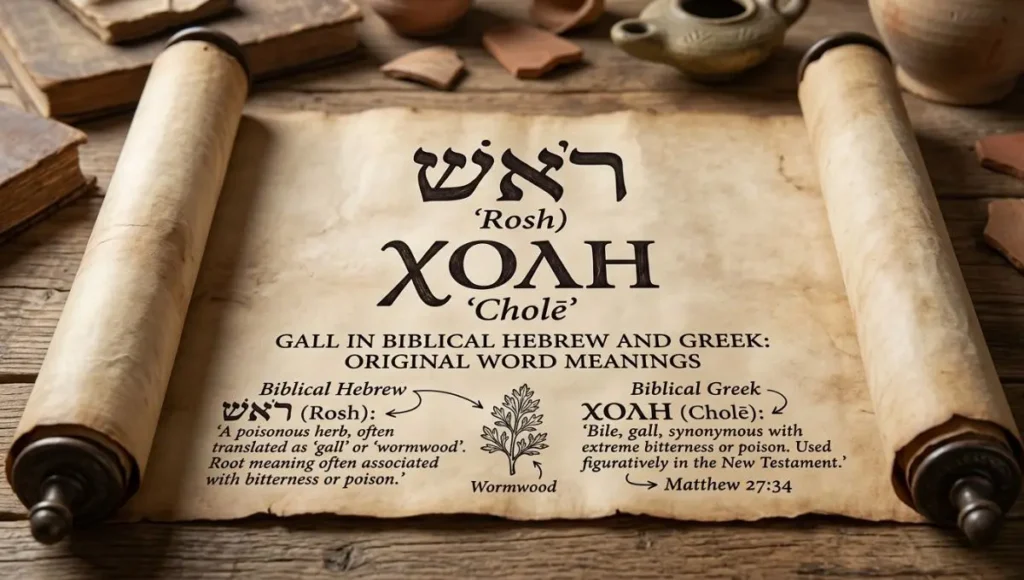
The English word “gall” actually translates a few different original-language terms, which is part of why the gall meaning in Hebrew and gall meaning in Greek can shift slightly depending on the passage.
In Hebrew, two main words are involved. Rosh generally points to a bitter, possibly poisonous plant sometimes rendered “hemlock” and shows up in passages about venom and toxic herbs. Mererah (or merorah) refers more directly to bitterness itself, including the bile of the human body.
In Greek, the word is chole, which carries the same dual sense of bitterness and bile. This is the term used in Matthew’s crucifixion account, and it echoes the Hebrew rosh from Psalm 69, a passage long read as pointing forward to the suffering of the Messiah.
Water of Gall Meaning in Bible
The phrase “water of gall” appears in Jeremiah, where God speaks of giving the people bitter water to drink as a form of judgment. Many scholars connect this image to a poisonous or extremely bitter plant infusion possibly poppy juice or wormwood used here as a vivid symbol of divine discipline.
The water of gall meaning in this context isn’t about literal poisoning. It’s a poetic way of describing the bitter consequences that follow persistent unfaithfulness. Bitterness, in other words, becomes the natural fruit of rebellion.
What Is Bitter Gall Meaning in Bible?
“Bitter gall” simply intensifies the word’s core meaning bitterness pushed to an extreme. Deuteronomy uses this kind of language to describe the root of idolatry growing among the people like a poisonous, bitter plant.
This is where the gall of bitterness meaning becomes important. The phrase isn’t only about taste; it’s a metaphor for a heart that has turned away from God and is now producing something toxic to itself and to others.
What Is Wine Mixed with Gall Meaning in Bible?
At the crucifixion, Jesus was offered wine mixed with gall before being placed on the cross. Matthew records this detail deliberately, tying it back to Psalm 69:21, a psalm of suffering where the writer says his enemies gave him gall for food.
The wine mixed with gall meaning points to two things at once: the cruelty of those mocking Jesus, and the fulfillment of a centuries-old prophecy. Jesus tasted it and refused to drink, choosing to face the full weight of suffering without numbing relief.
Wine Mixed with Gall Meaning in Bible
This moment is so significant that it’s worth pausing on again. Some bitter mixtures offered to crucifixion victims were meant as a mild painkiller. By tasting but refusing it, Jesus signaled that he would not soften or shorten his suffering he would drink the full cup the Father had given him.
Vinegar Mingled with Gall Meaning in Bible
Mark’s Gospel describes the same drink slightly differently, calling it wine mixed with myrrh, while Matthew calls it vinegar mingled with gall. These aren’t contradictions; both phrases describe a harsh, bitter drink given to someone in agony, likely combining sour wine with a bitter additive.
The vinegar mingled with gall detail reinforces just how unwelcoming and hostile the scene at Golgotha was, even down to the drink offered to a dying man.
What Is Gall in the Bible Matthew 27?
Matthew 27:34 is the most quoted gall verse in the New Testament. It records soldiers offering Jesus wine mixed with gall just before the crucifixion, which he tasted and declined.
This single verse does heavy theological lifting. It links Jesus directly to the suffering figure of Psalm 69, confirms his willingness to endure pain without escape, and shows how even small, seemingly minor details of the crucifixion were tied to prophecy.
Gall and Prophecy: Old Testament Predictions Fulfilled

Long before the crucifixion, Psalm 69:21 described a righteous sufferer being given gall instead of comfort. Centuries later, the Gospel writers saw this fulfilled in stunning detail at the cross.
This pattern matters for anyone studying Messianic prophecy. The gall detail is small, but its precision predicted, then fulfilled almost word for word is part of why Christians point to it as evidence of divine design behind the biblical narrative.
Wormwood and Gall Meaning in Bible
Wormwood and gall are frequently paired in Scripture, especially in Lamentations, where the prophet describes being filled with both as he mourns Jerusalem’s destruction. Both words describe intense bitterness, though wormwood is specifically a bitter plant while gall can refer to bile or a bitter substance more broadly.
The wormwood and gall pairing intensifies the emotional weight of a passage it’s biblical shorthand for the deepest kind of grief and affliction a person can experience.
How to Pronounce Gall Meaning in Bible
“Gall” is pronounced simply as “gawl,” rhyming with “ball” or “fall.” It’s a single syllable, which makes it easy to read aloud in study groups or sermons, even though its meaning carries significant theological weight.
Symbolism of Gall Meaning in Bible
Across Scripture, gall consistently symbolizes bitterness whether that’s the bitterness of judgment, of sin’s consequences, of grief, or of human cruelty. It’s rarely just about taste; it’s almost always pointing to something deeper happening in the heart or in history.
The gall symbolism in the Bible also connects to themes of testing and refusal. Just as Jesus refused the bitter drink, believers are often called to refuse the bitterness of resentment and unforgiveness, even when it’s offered freely by painful circumstances.
Differences Between Gall, Myrrh, and Wormwood in Scripture
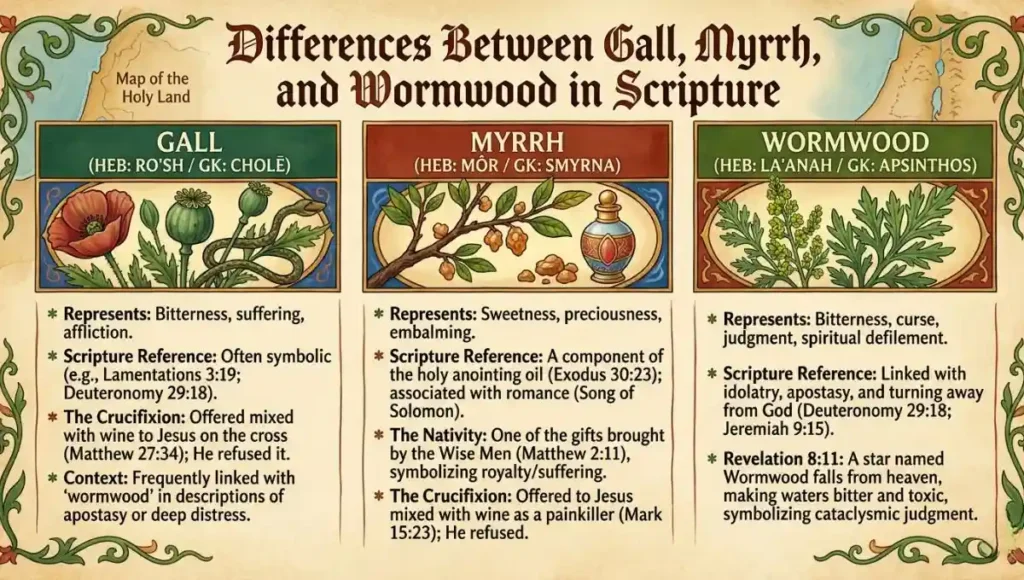
These three terms overlap but aren’t identical. Gall usually points to bile or a generally bitter, sometimes poisonous substance. Myrrh is a fragrant resin, used both medicinally and ceremonially, that could also carry a bitter edge. Wormwood is specifically a bitter plant, often used as a symbol of sorrow or judgment.
Mark’s mention of “wine mixed with myrrh” alongside Matthew’s “gall” likely describes the same bitter drink, since myrrh could also taste bitter and the Gospel writers weren’t always using technical precision they were describing the same painful moment from slightly different angles.
Cultural and Historical Context of Gall
In the ancient Near East, bitter substances like gall were sometimes used medicinally as crude anesthetics, antiseptics, or even punishments. Offering a bitter drink to someone in pain wasn’t unusual; it reflected both ancient medical practice and the harsh realities of Roman execution customs.
Understanding gall in biblical times this way helps modern readers avoid imposing modern assumptions onto an ancient practice. The gesture toward Jesus could have been read as either mercy or mockery, depending on intent and the text suggests it leaned toward cruelty.
Gall in Spiritual and Psychological Terms
Spiritual Perspective
Spiritually, gall represents the bitterness that grows when a person turns from God whether through idolatry, sin, or hardened resentment. Acts 8:23 uses exactly this language, warning Simon the sorcerer that his heart was “in the gall of bitterness,” a vivid image of inner corruption needing repentance.
Psychological Perspective
Psychologically, gall’s symbolism translates surprisingly well into modern language about emotional health. Unresolved anger, long-held resentment, and unforgiveness function much like gall a bitter substance that, left untreated, poisons the person carrying it more than anyone else.
Case Study: Biblical Example of Gall
Acts 8:23 offers one of the clearest case studies. Simon, a sorcerer who had professed faith, tried to buy spiritual power with money. Peter’s rebuke that Simon’s heart was full of “the gall of bitterness” shows gall functioning as a diagnosis of spiritual sickness, not just a literal substance.
This example demonstrates how the biblical definition of gall stretches comfortably from the physical to the moral, giving readers a tool to examine their own hearts for hidden bitterness.
Practical Lessons from the Meaning of Gall
A few consistent lessons emerge from these passages. Bitterness, left unaddressed, spreads and corrupts. Suffering offered “relief” isn’t always good relief sometimes the better choice is to face pain honestly, as Jesus did. And prophecy fulfilled in small details, like a sip of bitter wine, can strengthen faith in the bigger promises of Scripture.
These threads tie together the spiritual lessons from gall that many readers come looking for: it’s a call to examine inner bitterness and choose forgiveness and endurance instead.
Cultural and Modern Relevance
Even outside religious study, “gall” survives in everyday English to “have the gall” to do something means to act with shameless boldness. That modern usage actually echoes the biblical sense of something sharp, unpleasant, and hard to swallow, even if the connection has faded from common awareness.
For believers, the word still carries its older weight: a reminder that bitterness, however it shows up, is something to recognize and release rather than carry indefinitely.
Frequently Asked Questions
What does gall mean in the Bible?
Gall refers to a bitter, often poisonous substance literally bile or a bitter herb used throughout Scripture as a symbol of suffering, judgment, and inner bitterness.
What is the gall meaning in Hebrew and Greek?
In Hebrew it’s rosh or mererah, both pointing to bitterness or poison; in Greek it’s chole, used at the crucifixion and meaning bitter bile or herb.
Why was Jesus offered wine mixed with gall?
Soldiers offered it either as a crude painkiller or mockery; Jesus tasted it but refused to drink, fulfilling Psalm 69:21 and embracing his suffering fully.
What does “gall of bitterness” mean in Acts 8:23?
It describes a heart corrupted by sin and resentment, as Peter warned Simon the sorcerer about his spiritual condition.
What is the difference between gall and wormwood?
Gall typically refers to bile or a bitter substance, while wormwood is a specific bitter plant; both are often paired to express deep grief or judgment.
Does gall always represent something negative?
Almost always it consistently symbolizes bitterness, suffering, or corruption, rarely appearing as a positive image in Scripture.
Conclusion
The gall meaning in Bible stretches from a literal bitter fluid to one of the richest symbols of suffering and inner corruption in Scripture. From Jeremiah’s water of gall to the wine mixed with gall at the cross, and from Lamentations’ wormwood and gall to Peter’s warning about the gall of bitterness, this single word threads through judgment, prophecy, and personal spiritual health.
Reading these passages together gives a fuller, more grounded understanding of why bitterness in any form is something Scripture consistently calls believers to face honestly and let go of.

Zohaib Israr is a content writer at [prayersmsg.com], specializing in Messages and Prayers. With 5 years of experience, he creates meaningful, engaging, and easy-to-read content that connects with readers.