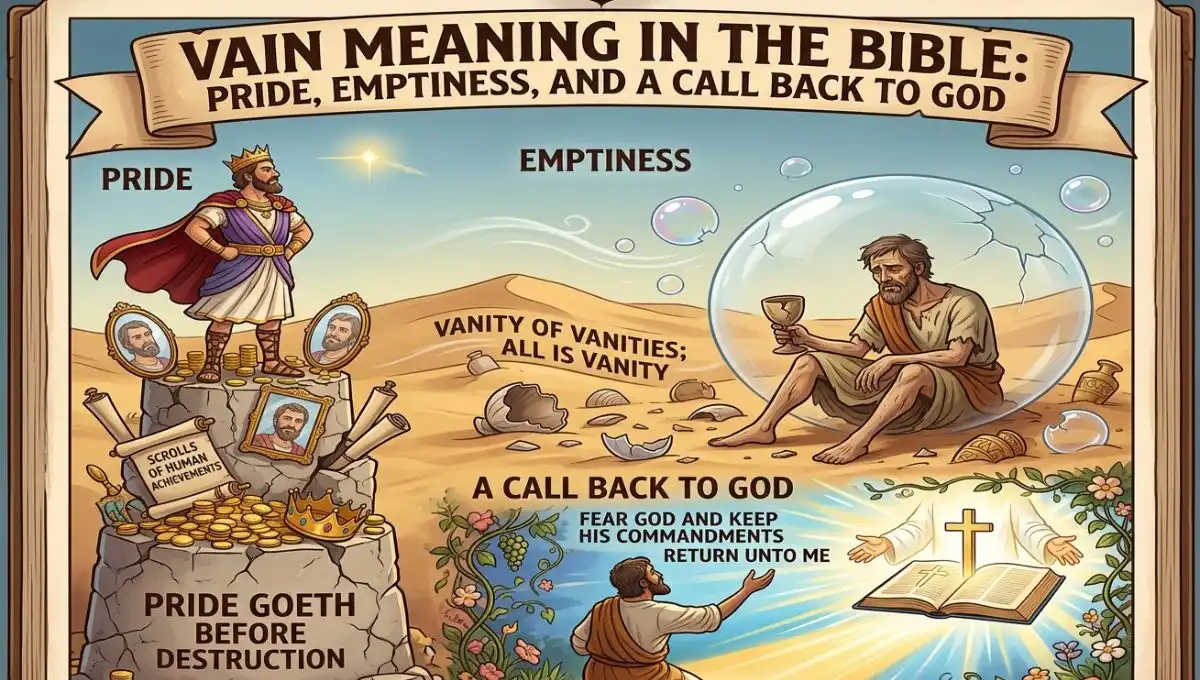
Every believer has likely heard the phrase “it’s all vanity” or been told not to “take God’s name in vain.” But what do these expressions truly mean? The vain meaning in the Bible goes far deeper than modern language suggests.
It is not simply about being conceited or self-obsessed. In Scripture, “vain” touches the core of the human condition our tendency to pursue what is empty, hollow, and separated from God.
Understanding the vain meaning in the Bible equips believers to identify spiritual emptiness in their own lives and return to what truly matters: a humble, faithful walk with God.
Biblical Meaning of Vain
What Vain Means in Scripture
The biblical meaning of vain traces back to powerful original-language words. In the Old Testament, the primary Hebrew word is hebel, which literally means “breath” or “vapor.”
The word hevel is frequently translated as “vanity” in Ecclesiastes and literally means something transient, insubstantial, and ultimately meaningless.
A second Hebrew word, shav’, often rendered “vain” in legal and moral contexts, carries meanings of falsehood, worthlessness, and moral emptiness.
In the New Testament, the Greek word kenos, often translated “vain,” means empty and “vain” can almost always be replaced by its synonym “empty,” often with advantage in modern English.
The words “vain,” “vanity,” and “vanities” are frequent throughout the Bible. Their idea is almost exclusively that of evanescence, emptiness, including idolatry and wickedness as being not only evil but empty and hollow things.
So the vain meaning in the Bible encompasses three core ideas: something that is empty, something that is temporary, and something that is separated from God’s truth.
Vain and the Heart
The Bible does not treat vanity as merely a behavioral problem it is a heart problem. When a person pursues vain things, their inner spiritual compass has shifted away from God and toward self.
Vanity causes a person to think very highly of themselves, yet as Christians, we are called to think of ourselves with sober judgment. Vanity will cause a life of self-obsession, but a life with Christ will be a life of love, compassion, and freedom.
The vain meaning in the Bible therefore begins in the heart. Before vain actions emerge, vain desires and vain thoughts take root. This is why Scripture consistently pairs warnings about vanity with calls to examine the inner life and seek God’s presence.
Is Vain Always Negative?
Mostly, yes but the context matters greatly. When the words “vain” or “vanity” appear in the Bible, they have very different meanings from modern usage.
Anything that is not “godliness” that does not contribute to becoming more like God and helping others on that path is ultimately “vain.”
However, Paul offers an encouraging flip side: “Therefore, my beloved brothers, be steadfast, immovable, always abounding in the work of the Lord, knowing that in the Lord your labor is not in vain” (1 Corinthians 15:58).
When our efforts are rooted in God’s purpose, they are never empty. The vain meaning in the Bible ultimately points believers toward meaningful, God-centered living.
Examples of Vanity in the Bible
Solomon and the Vanity of Earthly Pursuits
No figure in Scripture explored the vanity in the Bible more thoroughly than King Solomon. Despite being granted unparalleled wisdom and wealth, Solomon tested the limits of earthly pleasure and achievement and found them hollow.
Five times in the book of Ecclesiastes, King Solomon says the exact phrase, “All is vanity” (Ecclesiastes 1:2, 1:14; 2:17; 3:19; 12:8). He tested pleasure, accumulated possessions, built great works, and acquired wisdom yet found no lasting satisfaction.
Written by Solomon in the later years of his life, Ecclesiastes’ central theme is the pointlessness of human activity and human goals apart from God. Solomon’s search proved futile based on one pivotal detail his pursuit was limited to the finite span of life here on earth.
Solomon pursued the right thing wisdom but for the wrong reason: pride. He shifted his reasoning away from a proper fear of God toward pursuing wisdom for its own glory. What should have been a good pursuit became tainted by vanity.
Solomon’s story is a sobering illustration of the vain meaning in the Bible: even the best things in life become empty when pursued apart from God.
Nebuchadnezzar’s Pride and Humbling
King Nebuchadnezzar of Babylon stands as one of the Bible’s most vivid portraits of destructive pride. Nebuchadnezzar’s pride and vanity led to his downfall.
He boasted about his kingdom, attributing its glory to himself rather than God, and was humbled dramatically as a result declaring, “Is not this great Babylon, which I have built by my mighty power?” (Daniel 4:30, ESV).
The consequences were severe. Nebuchadnezzar went from being the king of the world to eating grass like an animal outside his palace (Daniel 4:33).
His story illustrates a core biblical truth: God resists the proud but gives grace to the humble (James 4:6). The vain meaning in the Bible becomes especially clear in Nebuchadnezzar’s fall pride that exalts self above God will inevitably be brought low.
The Pharisees and Outward Religion
In the New Testament, the Pharisees represent a different but equally dangerous form of vanity: religious performance without genuine devotion. Jesus condemned their approach directly.
The scribes and Pharisees were worshiping God in vain because they had heaped up their own traditions and boasted of their own righteousness. Jesus told them, “In vain do they worship me, teaching for doctrines the commandments of men” (Matthew 15:9).
In the New Testament, Jesus rebuked the Pharisees for their outward show of religion while lacking inward righteousness. Their actions were often rooted in vanity, seeking the praise of men rather than God’s approval.
This is the vain meaning in the Bible applied to religious life: going through the motions of worship while the heart remains far from God.
Spiritual Significance and Symbolism of Vain
The spiritual meaning of vain in Scripture is rich and multi-layered. Vanity is not just a moral failure it is a spiritual condition that reflects the broken human tendency to seek fulfillment in created things rather than the Creator.
Symbolically, the Hebrew word hebel vapor or breath paints a picture of something real but fleeting. The sunrise may be beautiful, but it is hebel. It is passing. If you try to hang on to it you will inevitably be frustrated and disappointed because it does not last.
This is why the biblical definition of vanity applies to wealth, fame, pleasure, and even religious ritual when divorced from genuine faith. These things exist but fade. Only what is rooted in God’s eternal truth endures.
The vain meaning in the Bible also carries a prophetic dimension. When Israel turned to idols, Scripture called those idols “vanity” not merely useless objects, but symbols of spiritual abandonment, emptiness chosen over the living God. The biblical narrative warns against placing too much importance on outward appearances or temporary accolades, suggesting that such vanity can distract individuals from their spiritual walk and relationship with God.
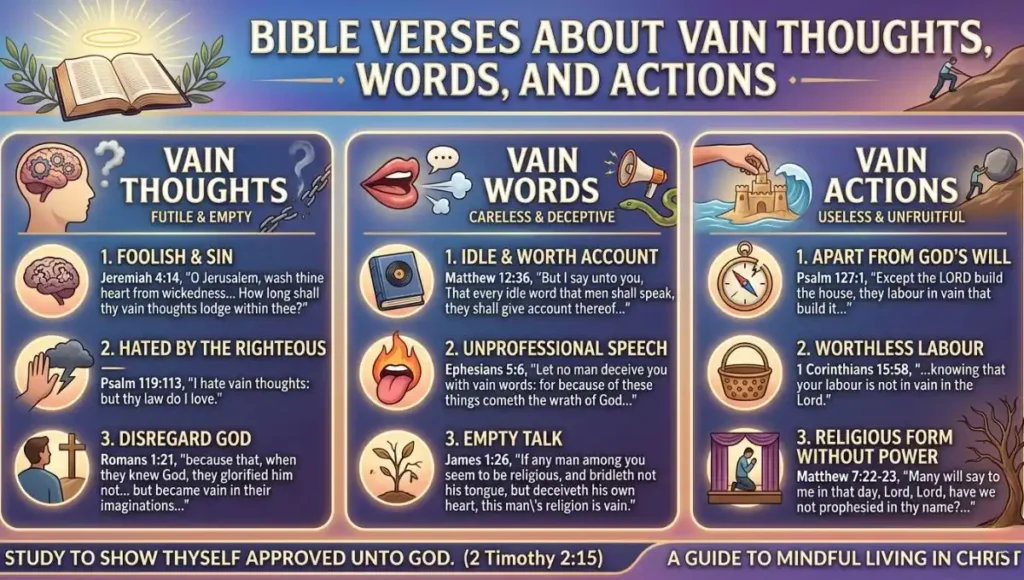
Bible Verses About Vain Thoughts, Words, and Actions
Vain Worship and Empty Religion
Scripture is direct in its condemnation of worship that lacks sincerity. Jesus quoted Isaiah when addressing the Pharisees:
Matthew 15:8–9 “This people honors me with their lips, but their heart is far from me; in vain do they worship me, teaching as doctrines the commandments of men.”
Even Christians can worship God in vain meaning in a useless, empty way. Without adoration of God and awe of His magnificence, we are just going through the motions. Jesus told the woman at the well that the Father seeks those who worship in spirit and in truth.
Psalm 127:1 makes clear that all labor apart from God is vain: “Unless the LORD builds the house, they labor in vain who build it; unless the LORD guards the city, the watchman stays awake in vain.”
Vain Imaginations and Thoughts
The vain meaning in the Bible extends powerfully into the mind. Romans 1:21 is one of the most striking verses on this subject:
Paul told the church in Rome that those “who knew God” did not “glorify him as God” and as a result “became vain in their imaginations, and their foolish heart was darkened” (Romans 1:21).
The phrase “became vain in their imaginations” means they became empty, vain, and foolish in their thinking in their inward reasoning, purpose, and design. God allowed their minds to become empty and foolish because they refused to honor Him.
Psalm 119:113 adds: “I hate vain thoughts; but thy law do I love.” The vain meaning in the Bible shows that unchecked vain thinking leads to spiritual darkness and moral confusion.
The Danger of Vain Words
Scripture also warns sharply against empty speech. Psalm 12:2 warns: “They speak vanity every one with his neighbor: with flattering lips and a double heart do they speak.”
Taking God’s name “in vain” (Exodus 20:7) means treating it as empty and insignificant using the holy name of the Lord without reverence or truthfulness. “To take God’s name in vain” means simply to take it for an “empty” or “not good” purpose.
Vain words are not merely meaningless chatter. According to the vain meaning in the Bible, they reflect a heart that has lost sight of God’s holiness and the weight of truth.
Read Also: 110 Short Prayers for Daily Blessings: Deep, Heartfelt Words to Begin Your Day with Faith
Biblical Interpretations in Dreams or Real Life
Many believers encounter the theme of vanity not only in Bible study but in their personal lives and even in their dreams.
A dream about chasing something just out of reach, working endlessly without gain, or watching a beautiful thing fade away can reflect the biblical reality of hebel the transience and emptiness of life apart from God’s purpose.
In real life, the vain meaning in the Bible surfaces whenever we invest our deepest energy, identity, and hope in things that cannot satisfy. Career success, social media validation, material wealth, and even human relationships when placed above God become forms of vanity.
The Bible’s teachings caution against vanity, a trait often linked with pride, arrogance, and self-absorption, driving a wedge between us and our Divine connection.
The biblical call is to recognize these patterns whether in a dream’s symbolism or in a quiet moment of honest self-examination and return to God as the only source of lasting meaning.
How to Overcome Vanity Through Faith and Humility

Seeking God’s Purpose Above Self
The antidote to the vain meaning in the Bible is living for God’s eternal purpose rather than self-glorification. Ecclesiastes, after cataloguing the emptiness of worldly pursuits, concludes with this: “Fear God and keep his commandments, for this is the whole duty of man” (Ecclesiastes 12:13).
This perspective encourages believers to look beyond the surface and recognize the importance of character, integrity, and faith rather than placing too much importance on outward appearances or temporary accolades.
When we anchor our identity and goals in God’s will rather than our own ambitions, our labor moves from hebel (vapor) to something of eternal weight and value.
Practicing Humility and Gratitude
Humility is the direct biblical remedy for vanity. Vanity causes self-obsession, but a life with Christ will be a life of love, compassion, beauty, and freedom. Jesus will give you freedom vanity will only leave you alone.
Gratitude disrupts the cycle of vanity by shifting our focus from what we have achieved to what God has given. Thankfulness acknowledges dependence on God rather than self-sufficiency the very opposite of the pride that leads to vain living.
Romans 1:21 identifies ingratitude as a root cause of vain thinking. When people “knew God” but were “not thankful,” their hearts became darkened. Practicing daily gratitude is therefore a powerful spiritual discipline against the vain meaning in the Bible taking hold in our lives.
Living for Eternal Rather Than Temporary Things
Anything that lacks eternal value has no real value at all. Ecclesiastes speaks to those times when life seems empty or doesn’t make sense.
Jesus taught: “Do not store up for yourselves treasures on earth, where moth and rust destroy… but store up for yourselves treasures in heaven” (Matthew 6:19–20). This is the practical response to what vain means in the Bible redirect investment from what fades to what lasts.
Serving others, growing in biblical wisdom, building faith communities, and walking in obedience to God are the kinds of activities Paul calls “not in vain” (1 Corinthians 15:58). These eternal pursuits transform ordinary life into something of lasting significance.
Practical Lessons & Faith Insights

The vain meaning in the Bible offers believers several practical, life-shaping lessons:
Examine your motivations. Before investing deeply in a goal or pursuit, ask: Is this rooted in God’s purpose or in self-glory? Solomon had wisdom but chased it for the wrong reasons. Motive determines whether labor is hebel or eternal fruit.
Guard your thought life. Romans 1:21 shows how vain imaginations begin with refusing to acknowledge God. Daily Scripture meditation and prayer help anchor the mind to truth and keep thoughts from drifting into spiritual emptiness.
Worship with your whole heart. The Pharisees showed that religious activity without genuine devotion is worthless. God calls His people to worship in spirit and in truth — authentic, humble, heart-centered devotion.
Stay rooted in community and accountability. Vanity thrives in isolation. Surrounding yourself with fellow believers who speak truth lovingly helps expose blind spots and keeps spiritual priorities in focus.
Remember the brevity of life. Psalm 39:5 reminds us that every person is “a mere breath” before God. This awareness is not meant to discourage but to liberate freeing us from the tyranny of temporary things and anchoring us in what is eternal.
The vain meaning in the Bible is ultimately not a message of despair but of redirection. It is Scripture’s loving invitation to stop chasing vapor and start living for the only One whose promises never fade.
Conclusion
The vain meaning in the Bible is one of Scripture’s most consistent and urgent themes. From Solomon’s searching lament in Ecclesiastes to Paul’s warning about vain imaginations, from Jesus’ rebuke of empty worship to the humbling of Nebuchadnezzar’s pride the Bible repeatedly calls believers to examine whether their pursuits, words, and thoughts are rooted in God’s eternal truth or in hollow, self-centered ambitions.
The biblical meaning of vain challenges us to ask hard questions: Are we worshiping God in spirit and truth, or going through religious motions?
Are we building our lives on God’s foundation, or on our own achievements? Are we living for treasures in heaven, or chasing what fades like morning mist?
The answer to vanity is not self-improvement it is surrender. When we humble ourselves before God, seek His purpose above our own, and anchor our identity in His eternal Word, life ceases to be hebel and becomes something of profound, lasting meaning.
As Solomon ultimately concluded: fear God, keep His commandments, and find in Him the only satisfaction that does not vanish like breath on a cold morning.
FAQs
Is vanity a sin in the Bible?
Yes, vanity is treated as a serious spiritual problem in Scripture. It reflects pride, self-centeredness, and the misplacement of trust all of which draw the heart away from God and lead to spiritual emptiness and moral darkness.
What is the difference between pride and vanity?
Pride is the exaltation of self above others or above God, while vanity is the pursuit of empty, hollow things for self-glorification. In the Bible, they are closely linked vanity is often the outward expression of pride at work in the heart.
What does Ecclesiastes say about vanity?
Ecclesiastes, written by Solomon, declares that life lived apart from God is hebel vapor, breath, utterly fleeting. All worldly pursuits wealth, pleasure, wisdom, and power are meaningless without the fear of God at the center of life.
What does it mean to labor in vain?
To labor in vain means to work without God’s blessing and direction, resulting in effort that produces no lasting fruit. Psalm 127:1 makes clear that unless God is the foundation of what we build, all our effort amounts to nothing of eternal value.
What are vain thoughts in the Bible?
Vain thoughts, according to Romans 1:21, are the empty, darkened reasoning that results when people know God but refuse to honor or thank Him. They are thoughts disconnected from God’s truth self-centered, aimless, and spiritually blind.
Can Christians struggle with vanity?
Absolutely. Even sincere believers face the temptation to seek human approval, pursue worldly success, or perform religion without genuine devotion. The Bible’s warnings about vanity are directed as much at God’s people as at outsiders.
How can I overcome vanity spiritually?
Overcoming vanity requires humility, gratitude, daily prayer, Scripture meditation, and a genuine orientation toward God’s eternal purpose rather than temporary self-promotion. Accountability within a faith community also helps keep spiritual priorities clear.
Why does God warn against vanity?
God warns against vanity because He loves His people and knows that vanity leads to spiritual emptiness, broken relationships, and separation from Him. He designed human beings for eternal purpose and warns against vanity to redirect us toward the fulfillment only He can provide.

Zohaib Israr is a content writer at [prayersmsg.com], specializing in Messages and Prayers. With 5 years of experience, he creates meaningful, engaging, and easy-to-read content that connects with readers.